
Last updated: 04-04-2026
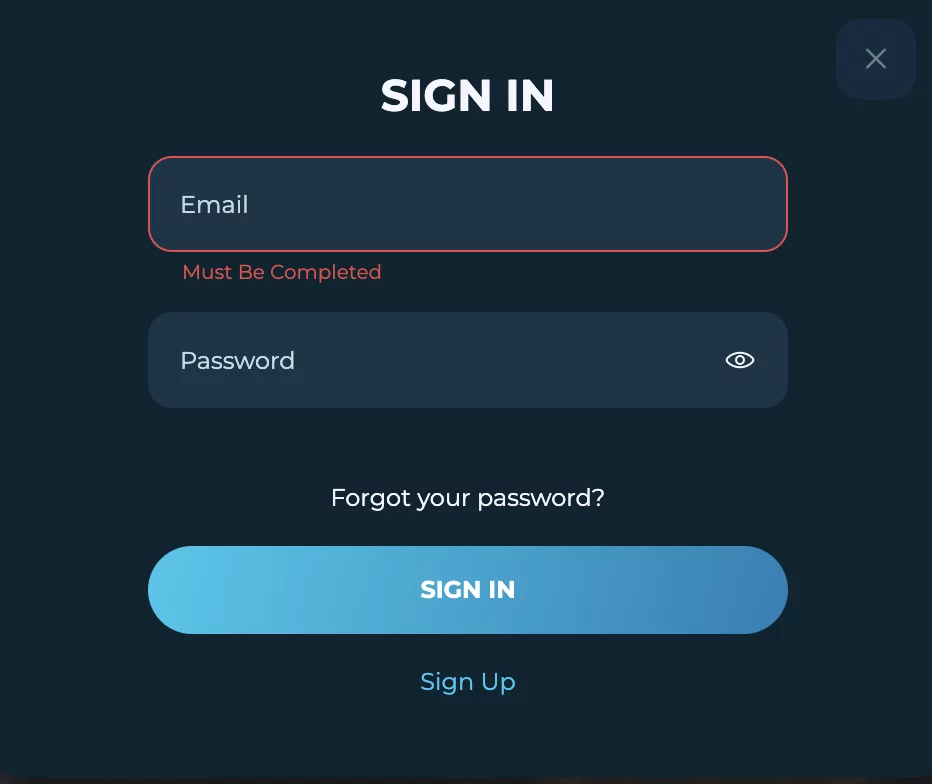
Listen yaar, hitting the login button at an online casino seems like the absolute simplest, most functional, and transparent action you can take to access a website or mobile app. You punch your email into a stark white box, slam your password into the perfectly aligned field below, and boom—you are granted seamless, highly responsive access to your account dashboard and the games lobby, ready to drop a few thousand rupees on the slots or a quick session of Teen Patti after a long, exhausting week navigating the endless traffic of Mumbai, Delhi, or Bengaluru. To a casual user, it's just a perfectly designed digital door swinging open into a familiar, intuitively structured entertainment environment. But let me completely shatter that architectural and psychological illusion for you right now. I'm Nikhil Arora, a Casino Editor and User Experience Reviewer, and my entire professional career is dedicated to auditing, wireframing, and dismantling the Information Architecture (IA), User Interface (UI) patterns, and cognitive-overload matrices of the offshore iGaming sector targeting the Indian market. That tiny little portal on the Casino 1995 homepage is not just a standard authentication checkpoint; it is a highly optimized "UX Interception Node." When you sit down with your morning masala chai and authenticate your session, you aren't just opening an entertainment portal; you are executing a massive background script that allows the casino's Content Management System (CMS) to completely hijack your interface flow. The platform uses the exact millisecond you hit "Submit" to override your intended destination, actively forcing your screen to load their highest-margin, most aggressively monetized funnels designed specifically to ensure you make a UPI or Paytm deposit instantly. The clean, frictionless design of the login box is meticulously engineered to ensure your cognitive defenses remain completely deactivated while the site fundamentally alters its layout around you to exploit your user journey.
For players operating within the massive Indian mobile-first market, the login process is uniquely dangerous because of the offshore usability void masked by familiar, localized web design standards and heavily trusted domestic payment gateways that seem completely native. Domestic UX guidelines set by the Ministry of Electronics and Information Technology (MeitY) and strict financial regulations from the Reserve Bank of India (RBI) heavily regulate how domestic entities like SBI YONO, ICICI iMobile, Zomato, or Flipkart construct their digital environments, ensuring absolute UI clarity, highly visible account balances, easily accessible customer support, and honest UX disclosures. But offshore corporate studios based in Curacao, Malta, or Cyprus face absolutely no such domestic UX (User Experience) restrictions when projecting their post-login visibility architectures onto your smartphone. Nobody in the broader Indian gray market is auditing how Casino 1995 deliberately uses a psychological technique called "Conditional Dark UX Routing" the exact moment your login is successful. If your balance is ₹0, the CMS will completely bypass the standard account menu and games lobby, actively blinding you to the rest of the platform and forcefully routing you to a specialized, full-screen Cashier dashboard. You literally cannot click on the games or your profile settings until you interact with a payment portal that visually screams "1-Click PhonePe Deposit" but mathematically locks you into a highly opaque bonus flow. The platform operates entirely within the boundaries of "Usability Asymmetry." We aggressively streamline and highlight your entry into the financial system to make spending via GPay or UPI physically effortless, but the moment the backend servers verify your credentials, the site architecture ceases to be an open, transparent app and becomes an active, adversarial maze designed solely to obscure any attempt to withdraw your Indian Rupees via IMPS.
If you want to survive in this unregulated digital storytelling matrix and actually have a fair shot at maintaining clear usability of your account and routing your winnings back to your bank, you have to fundamentally change how you evaluate a casino's interface from the second you enter your credentials. You must stop treating the Casino 1995 login box like a standard, honest gateway to your profile. It is an active editorial environment, and its primary function is behavioral steering through the absolute maximization of UI friction for withdrawals, and the complete elimination of friction for deposits. You need to know the exact hidden mechanics behind "Conditional Post-Login Obfuscation," the structural deception of "Z-Index Hijacking UX Pop-Ups," and the precise architectural formulas the casino uses to weaponize "Session Timeouts" to break your strategic visibility under the guise of keeping your session secure. In this exhaustive, unfiltered platform UX report, we are going to completely reverse-engineer the front-end blueprint of Casino 1995's authentication sequence. We will map out the dark UX patterns in their navigational flow, expose the horrific truth behind their fake security error states, and give you the analytical tools you need to stop bleeding lakhs of rupees blindly and start auditing the platform's layout with absolute, unyielding objectivity regarding your cashouts, bhai.
Author's tip from Nikhil Arora, Casino Editor & User Experience Reviewer: "Never evaluate the login screen without analyzing its immediate aftermath regarding UI manipulation and visual hierarchy. In my usability flow audits, the most critical vulnerability is the 'Post-Login Z-Index Ambush'. When you hit submit, editors routinely configure the CMS to instantly deploy a full-screen iframe pop-up advertising a '100% Seamless Paytm Reload Match'. Here is the total failure of UX parity: look at the application of Fitts's Law. We intentionally design the 'Deposit Now' button as a massive 300x80 pixel high-contrast Indigo block in the absolute center of your thumb's strike zone, ensuring it's the easiest thing to tap. What happens when you want to bypass it and find your real account dashboard? The 'X' to close the window? We render it in a pale grey, 12-pixel font, and push it to the extreme top-right corner, completely obscuring it from the standard visual scanning pattern. On mobile devices, we sometimes physically decouple the 'X' hit-box, making it microscopically small so that a slight mis-tap registers as a click on the payment gateway, effectively hijacking your screen. We are structurally editing the UI to manufacture accidental financial commitments that kill your account control. Always hunt for the hidden 'X' and ignore the neon distractions, yaar."The Conditional Routing Funnel: Stripping UX Autonomy
If there is one architectural reality that completely exposes the hostile, financially predatory nature of offshore casino UX design, it is the concept of "Conditional Routing" used to hyper-optimize liquidity extraction while destroying honest app usability. On a standard Indian e-commerce or banking app like HDFC, SBI YONO, or Amazon India, when you successfully log in, the UI transparently loads the exact page you were viewing before you authenticated, or sends you to a clean, highly visible neutral dashboard that honestly maps out all your options. The site respects your intent and grants you clear, frictionless control of your own data, reinforcing your digital agency. At Casino 1995, the platform editors have completely stripped away your UI autonomy in order to exploit your momentary lack of visibility and maximize the probability that you will make a UPI deposit instantly. The login button is strictly attached to a complex set of conditional 'if/then' rules within the CMS logic engine. We don't care where you *want* to look within your account menu; the site architecture dictates what you *will* see based entirely on what will keep your money flowing into the casino's merchant accounts.
When the server validates your password, it instantly checks your transactional state via the backend database. If the system detects that your balance is ₹0, the routing completely overrides standard UI transparency. You are actively blinded to the standard games lobby, your profile settings, and the responsible gambling tools. Instead, your screen is hijacked by a specialized, full-screen Cashier iframe. We surround this single-purpose UI with massive GPay, PhonePe, and Paytm logos, pre-selected ₹5,000 or ₹10,000 deposit tiles, and a pulsating "Deposit Now" button. We call this "The UX Chute." We have architecturally removed the standard "Hamburger Menu" from the top corner of this page to create a sense of tunnel vision, enveloping the player in highly visible symbols of action while aggressively hiding all other navigational options. Alternatively, if you log in and have a pending withdrawal, the UI drops you onto a dashboard heavily pushing the "Reverse Withdrawal" button, actively burying the visibility of the "Check Cashout Status" link. The platform editor is building a bespoke digital smokescreen around you the millisecond you arrive, ensuring you are blocked from everything except a state of continuous expenditure.
To visually map out this deliberate structural manipulation of your visibility and your wallet, I have designed a flowchart diagram detailing the "Conditional UX Routing Architecture." This illustrates exactly how the casino's backend evaluates your financial profile and forcefully obscures your browsing intent to keep you constantly funneling rupees back into their ecosystem through hostile UI funnels.
The "Forgot Password" Trap (Weaponized Cognitive Friction)
Every User Experience analyst knows that the true nature of a digital platform is revealed when a user encounters an error state during authentication. If you type your password incorrectly on a heavily regulated, transparent Indian e-commerce site, the architecture responds gracefully with standard, highly visible UI conventions. A clean, inline message appears: "Password incorrect. Try again or click here to reset." The user remains in control, the process is completely frictionless for self-service recovery, and cognitive load is minimized. However, when you fail a login at Casino 1995, the offshore platform editors use "The Error State" to initiate a profound architectural shift. The design stops being helpful and becomes actively opaque, utilizing a dark UX pattern known as "Security Theater" to obscure your options and inject massive administrative friction precisely when it benefits the house's liquidity retention goals.
After three failed attempts, the site doesn't just quietly lock you out; it literally alters the DOM (Document Object Model) to apply a `display: none;` tag to the "Forgot Password" hyperlink entirely, erasing it from your visibility. The site editors deliberately break the transparent self-service UI loop. Instead, they forcefully pop a red, flashing chat widget that overlays your screen with warnings of "UNAUTHORIZED ACCESS ATTEMPT." The architecture hides your real options and forces you to speak to a human (or a highly scripted bot). Why would a UI editor intentionally induce panic and hide a standard web convention? Because that chat interaction is an opaque "KYC (Know Your Customer) Harvesting Point." The support agent will refuse to restore your access to your account until you provide "Updated Verification Documents" (like a fresh Aadhar card, PAN card, a bank statement, or a selfie holding your ID) right there in the chat window. By making the error state deliberately terrifying and hiding your autonomous tools, the site creates an opaque administrative maze that they will later weaponize if you try to withdraw funds via IMPS. You thought you just made a typo; the site's UI used it to trap you in a compliance dossier, ensuring that while depositing via UPI remains visibly 1-click, your eventual withdrawal pathway will be blocked by invisible administrative loops and frustrating UI delays.
| Error State Component | Standard E-Commerce UI | Offshore Casino UX Architecture | UX Analyst Audit |
|---|---|---|---|
| Visual Feedback | Subtle inline red text. Low cognitive load, calm instructions to regain access. | Haptic screen shake and massive, aggressive modal overlays dominating the Z-index with 'Hacking' warnings. | Designed to induce a physiological stress response and trigger panic, obscuring logical troubleshooting and forcing compliance. |
| Recovery Pathway | Automated email reset link granting frictionless UX flow back in 10 seconds. | DOM manipulation visually hides the reset link via CSS, pulling you into a mandatory Live Chat detour to provide PAN/Aadhar. | A deliberate injection of friction. The casino weaponizes bad UX to hide your path and force an administrative interrogation. |
| Account Impact | Account pathways remain structurally untouched and fully visible. | The 'lock' burns through your active bonus expiry timers while you are trapped in the poorly designed chat UI. | The error state is weaponized to guarantee that active promotional contracts quietly expire in the dark, ensuring your balance reverts to zero. |
To accurately measure the hostility of the Casino 1995 site architecture, I track a metric called the "UX Friction Index." This measures exactly how the interface scales its navigational obfuscation and cognitive load based on your financial actions. Notice how the features that drain your wallet (UPI deposits) grant completely visible, frictionless paths located in the primary thumb zones, while basic account recovery or finding your withdrawal limits triggers massive, insurmountable administrative darkness hidden behind hamburger menus.
Author's tip from Nikhil Arora, Casino Editor & User Experience Reviewer: "If you encounter a scary red 'Security Error' message during login, inspect the page source if you are on a desktop (Right Click -> Inspect Element). You will often find that the code for the 'Reset Password' hyperlink is still physically present in the DOM, but the site editor has hidden it using a simple 'display: none;' CSS property. This proves unequivocally that it is not a technical security lock; it is a superficial architectural dark pattern designed solely to break the user experience, destroy your honest visibility, and pull you into the KYC document-gathering queue to delay your eventual cashout. Don't let their fake UX theater keep you in the dark."The Daily Login Spinner: Z-Index Obfuscation & The Opaque Lock
One of the most effective structural UI strategies offshore casinos use to guarantee daily engagement and trigger impulsive deposits is the "Daily Login Wheel." From a UX standpoint, the daily spinner is a masterpiece of deceptive Information Architecture that entirely relies on destroying standard transparency and forcing an immediate, restrictive interaction on the player. It is typically constructed as an 'iframe' or a 'modal overlay' that dominates the exact center of your mobile screen the moment authentication is completed. We use a CSS property called the "Z-Index" to force this modal to the very top layer of the screen. The background is greyed out with a heavy opacity filter, completely obfuscating your view of the game lobby, your real account balance, or the withdrawal button. You are trapped in an opaque UI micro-environment where the only obvious, highly visible interactive element is a massive "SPIN NOW" button draped in text like "100% Free Guaranteed Prize."
As a User Experience Reviewer, I can assure you that the design of the modal is deliberately hostile to your understanding of your own liquidity, utilizing animations that cause cognitive overload and disarm your natural financial skepticism. If you look closely at the "Grand Prize" slice on the wheel (the ₹50,000 cash), it is physically drawn larger than its actual mathematical probability. The graphics are actively lying to your eyes. Furthermore, the terms associated with the "Free Spins" you inevitably win are rarely linked visibly inside the modal. The architecture intentionally highlights the visually satisfying spin button while completely obscuring the complex legal conditions. We force you to spin, we celebrate your "win" with cascading graphics and haptic feedback to inflate your ego, and we quietly add a highly restricted bonus balance to your account—instantly locking your true financial visibility. If you had a ₹20,000 balance ready to be cashed out, clicking that spinner just secretly attached a 40x wagering requirement to your account. You literally just clicked a highly visible UI button that erected an invisible wall blocking your ability to withdraw funds via IMPS.
| Modal UI Element | Visual Design & Copy | The UX / Architectural Purpose | Analyst's UX Defense Strategy |
|---|---|---|---|
| The 'Spin' Button | Pulsating, high-contrast Indigo, placed perfectly for a right-handed thumb tap to dominate usability. | To serve as the primary visual magnet, ensuring the user clicks instinctively before seeking a clear view of the required account lock terms. | Do not tap. Understand that 'spinning' constitutes legally binding acceptance of hidden bonus terms that will instantly pull a curtain over your withdrawal UI. |
| The 'Close' (X) Icon | 10pt grey font on a dark background, pushed to the extreme top-right corner, defying Fitts's Law. | To create artificial UI obfuscation, making the user believe that engaging with the wheel is the only visible way to reach the Cashier. | Always hunt for the obscured 'X' first. If the hit-box is unresponsive, click the darkened background outside the modal, which often forcefully closes the iframe and restores your UX control. |
| T&C Hyperlink | Completely omitted from the pop-up, or hidden inside a tiny "i" icon that obscures navigation by opening a new tab. | To separate the highly visible reward from the invisible mathematical reality, denying the user transparent access to understanding the 50x wagering rules. | The absence of clear, legible terms on the modal itself is a massive usability red flag. It is architectural proof that the offer relies on hiding the truth about your funds. |
Session Timeouts: The UX Extraction Reset
We have all experienced it. You log in, navigate perfectly using the UI to a low-volatility table game like Andar Bahar, you hit a nice win, maybe you walk away to grab your coffee before checking your account balance or withdrawing, and when you return, the screen has violently locked you out with a "Session Expired" pop-up. The casino's PR spin claims this is for "Bank-Level Security" to protect your balance from unauthorized access. As a User Experience Reviewer, I can tell you that this is a profoundly deceptive use of site architecture. It is engineered specifically to exploit your appreciation for safety while forcefully interrupting your momentum and resetting your user journey back into the dark, entirely erasing your recent session context from the UI.
From an editorial standpoint, why do they want to freeze your UI over 15 minutes of inactivity? Because if you were deep inside the "Table Games" sub-menu playing a game with a 99% RTP and building a cashable balance, the casino's profit margins were suffering. You weren't falling for the opaque deposit traps; you were surviving and looking clearly at the withdrawal UI. The "Secure Timeout" forces a complete DOM refresh. The moment you log back in, your visual connection to your winning session and your clear path to cash out is broken. You are dumped right back onto the main homepage. The architecture forces you to walk past the flashing "Hot Games" banner, the fake "Live Winners" ticker, and the "Megaways" carousel all over again. Furthermore, the fresh login triggers the CMS to re-evaluate your balance state. If your balance is low, the site editor will deploy a massive "Reload Bonus" pop-up instantly, integrating the Paytm or UPI gateway directly into your thumb's strike zone. The "Security Timeout" is actually just an editorial mechanism used to yank your visibility away from a mathematically profitable area, interrupt your cashout flow, and drop you back into a highly targeted, opaque payment ambush while completely destroying the transparent history of your session.
The final word on maintaining visual clarity
When you strip away the high-resolution graphics, the stunning layout, and the flashing promotional banners, the login interface at Casino 1995 is a stark reminder of who actually controls the digital architecture and the usability of your user experience. You are renting space on their offshore servers, and they govern the navigation with a relentless focus on extracting your liquidity by actively obscuring your UI autonomy, wrapped in a blanket of incredibly persuasive front-end design and highly visible deposit buttons. By utilizing Conditional Routing to bypass your intent, weaponizing the error states to break standard web conventions under the guise of "fraud protection" to hide your path to withdrawals, and deploying inescapable modal pop-ups that block out the wider app with fake winning potential and instant deposit traps, they ensure that the risk of you navigating the site objectively is almost completely eliminated. If you let their opaque architecture dictate your vision instead of conducting a thorough, analyst-level audit of the underlying UI components, you will inevitably be blinded and funneled straight into the editor's trap.
Remember, you must be 18+ to gamble online in India. Online casinos are strictly entertainment, not a guaranteed way to beat a multinational corporation or a reliably transparent source of income. If you're dropping rupees and finding yourself violently frustrated by being hidden behind opaque menus, fighting with a broken chat UI over a stalled IMPS withdrawal while deposit paths remain beautifully clear, or realizing how easily you tapped a toxic bonus button from a pop-up simply because the 'X' was invisible and the haptics tricked you, it is absolutely time to step away. If you're depositing more than you can mathematically afford to lose, do not trust the platform's beautifully designed "Responsible Gambling" toggles—they are usually the hardest buttons to see. Use system-level website blockers or contact the **NIMHANS Centre for Addiction Medicine (080-46110007)** immediately for free, confidential support. The house always hires UX editors to build the digital maze of asymmetrical visibility and liquidity extraction, but understanding the site's IA architecture ensures they don't get a free shot at blinding your bankroll, bhai. Play smart, audit the gateways, and demand absolute objective usability from the moment you log in.